
Skip to main content Skip to footer

Fibre

for Health Professionals

At a glance:

  • Dietary fibre comprises a group of different substances in plant foods which cannot be completely broken down by human digestive enzymes.
  • A high fibre intake is associated with reduced risk of several conditions including constipation, heart disease, type 2 diabetes and colorectal cancer.
  • Dietary fibres have different properties (solubility, viscosity and fermentability) which vary depending on origin and processing. They each have different effects on the body.
  • Higher fibre intakes are associated with lower risk of cardiovascular disease, type 2 diabetes and colorectal cancer. Evidence is strongest from prospective cohort studies, while trial evidence supports clear benefits for bowel function and some cardiometabolic risk factors
  • Some dietary fibres are fermented by gut bacteria and dietary fibre consumption may affect the gut microbiota.
  • Adults in the UK are recommended to consume 30g of fibre a day but are currently consuming 16.4g a day on average, and 96% of adults do not meet the recommendation.
  • Scientific research is still developing in relation to how different fibre types interact with the gut microbiota and wider health outcomes is still developing, particularly in relation to fibre type, dose, food matrix and inter individual variability.

What is dietary fibre?


Dietary fibre refers to a complex group of substances in plant foods which cannot be completely broken down by human digestive enzymes. This includes waxes, lignin, beta-glucans and polysaccharides such as cellulose and pectin.


Originally, it was thought that dietary fibre was completely indigestible and did not provide any energy. It is now known that some types of fibre can be fermented in the large intestine by gut bacteria (collectively known as the gut microbiota), producing short-chain fatty acids and gases (methane, hydrogen and carbon dioxide). The fatty acids are absorbed into the bloodstream and provide a small amount of energy which can be used by the cells lining in the colon - this is thought to strengthen gut barrier function.


"In the UK, only around 4 in 100 adults meet the recommended fibre intake, so finding simple ways to include more fibre in everyday meals really matters."


Katerina Sakellaropoulou, Nutrition Scientist, British Nutrition Foundation

Why fibre matters for health

A large body of research shows that higher fibre intake is associated with better long-term health outcomes.


Heart health

Some fibres, particularly soluble fibres such as beta‑glucans, can help lower LDL (often called “bad”) cholesterol by reducing its absorption in the gut.


Blood sugar control

Fibre slows digestion, which helps reduce sharp rises in blood glucose after meals and supports better glycaemic control.


Digestive health

Some types of fibre, such as bran from wholegrains, increases stool bulk and helps prevent constipation, supporting normal bowel function.


Long-term disease risk

High-fibre diets are linked to a lower risk of:

  • Cardiovascular disease
  • Type 2 diabetes
  • Colorectal cancer


These findings are supported by large-scale reviews of epidemiological studies and clinical trials.

Key dietary fibre sources:

 loading=

Wholegrains (e.g. oats, barley, whole wheat)

  • Provide cereal fibres including cellulose, arabinoxylans and beta-glucans
  • Shown to improve gut function, reducing risk of constipation
  • Linked with improved cholesterol and heart health 
 loading=

Pulses (beans, lentils, chickpeas)

  • Provide fermentable fibres, such as oligosaccharides which are used for ‘food’ by beneficial gut bacteria
  • Support gut bacteria and blood sugar control
 loading=

Fruit and vegetables

  • Provide a mix of fibre types including fermentable pectins and fructans, and insoluble types such as cellulose
  • Can have a range of health effects including supporting heart health, reducing risk of constipation and helping blood sugar control
 loading=

Nuts and seeds

  • Provide a range of fibre types including fermentable oligosaccharides, soluble pectins and insoluble cellulose.
  • Can support satiety, help lower cholesterol and support gut health.
 loading=

Resistant starch foods (e.g. cooled potatoes or pasta)

  • Act like fibre in the gut because the structure of these starches mean they cannot be digested
  • Feed beneficial bacteria and can support the microbiome

Sources of Fibre:

Food

portion size (g)

fibre per portion (g)

fibre per 100g

Starchy foods

Wholegrain pasta

180

8.8

4.9

Oats

45

3.5

7.8

Baked potato

220

4.6

2.1

Quinoa

180

6.3

3.5

Bran flakes

40

5.4

13.5

Wholemeal bread

80

5.8

7.3

Bulgur wheat

180

4.4

2.4

Fruit and veg

Berries

80

3.3

4.1

Banana

80

1.1

1.4

Apple

80

1.0

1.3

Pear

80

1.8

2.3

Spinach

80

1.0

1.3

Broccoli

80

1.1

1.4

Green beans

80

3.3

4.1

Carrots

80

3.1

3.9

Dates

30

3.0

10.0

Dried apricots

30

3.0

10.0

Protein foods

Pumpkin seeds

20

1.3

6.7

Sunflower seeds

20

1.6

8.0

Almonds

20

2.0

10.0

Lentils

120

8.1

6.8

Chickpeas

120

6.2

5.2

Red kidney beans

120

9.4

7.8

Baked Beans

200

8.5

4.3

Types of fibre and how they work in the body


The familiar distinction between ‘soluble’ and ‘insoluble’ fibre is still widely used, but it is increasingly seen as an oversimplification. In practice, the behaviour of many fibres is not fixed: their solubility can shift depending on their source and the degree to which they have been processed.


A more informative way to think about fibre is in terms of its fermentability, that is, how readily it is broken down by the gut microbiota. From this perspective, fibres sit on a spectrum, being more or less fermentable, and this has important implications for their effects on health. Inulins and pectins for example are highly fermentable and can provide food for gut bacteria.


Another useful characteristic is viscosity. Viscous fibres, most of which are traditionally classed as soluble, thicken when mixed with fluids. Examples include gums, pectins, psyllium and beta glucans. In the digestive tract, they form a gel-like substance that can slow the absorption of nutrients, including glucose, helping to moderate post-meal rises in blood sugar and some types can help to lower cholesterol levels.


Fibres, such as cellulose, that are typically found in cereal grains such as wheat or barley, have traditionally been classed as ‘insoluble’ and have low fermentability. These fibres trap water in the gut, providing bulk to stools, helping them move more quickly through the gut and helping to prevent constipation. 

Fibre and the gut microbiome


Fibre plays a key role in shaping the gut microbiome, the community of bacteria that live in the digestive system.


When certain fibres are fermented, they provide fuel for beneficial bacteria. This process can increase microbial diversity, which studies have linked to better metabolic and immune health. 


Studies show that increasing fibre intake can lead to measurable changes in gut bacteria within weeks, although responses vary between individuals.


Recent expert reviews highlight how our understanding of the gut microbiome has developed rapidly in recent years. Large, multi-centre studies using advanced techniques such as metagenomics (large-scale analysis of the DNA of our gut microbiome) now allow scientists to assess not just which bacteria are present, but what they are doing.  


This research shows that the function of the microbiome, including how it processes dietary fibre, may be more important than its exact composition. 


For example, two people may have very different gut bacteria, but their microbiomes can still perform similar roles. If both are able to break down fibre and produce beneficial compounds, such as short-chain fatty acids, they may experience similar health benefits.


Fibre from the diet provides fuel for gut bacteria, supporting metabolic activity that can influence digestion, immune function and overall health.


However, responses to diet vary between individuals, and researchers highlight that translating microbiome science into clear dietary advice remains an ongoing challenge

How much fibre should I have in my diet?


The government recommends that adults should consume 30g of fibre every day. The amount of fibre children need in their diet depends on their age.


There isn’t a specific recommendation for children under two years old but they should get fibre from a varied diet once they start to eat solid foods from about 6 months old. 

Take a look at the recommended daily intakes of fibre in the table below:

Age (years)

Recommended intake of fibre

2-5

15g per day

5-10

20g per day

11-15

25g per day

16 and over

30g per day

How can I include more fibre in my diet?


Adults in the UK are not consuming enough fibre. On average, we consume about 16g per day, which is half of the recommended 30g; so it’s important to understand how we can get more fibre into our diets. 


That is only 4 in 10 adults meeting the fibre requirement.


"Making sure you get your 5 A DAY and swapping white bread, pasta or rice for wholegrain versions are all good ways to increase your fibre intake"


Dr Stacey Lockyer, Senior Nutrition Scientist, British Nutrition Foundation

You might see phrases on the front of food packets such as ‘source of fibre’ or ‘high in fibre’. You can also check the nutrition label on the back of the pack to find out the fibre content per 100g of the food. A food is a ‘source of’ fibre if it has at least 3g fibre per 100g, and ‘high in’ fibre if it has at least 6g per 100g. 


*The exact fibre content of foods can vary depending on the brand and portion size.


We should all aim to eat at least five portions of fruit and vegetables a day. If you do, this will help you reach the recommended fibre intake, as well as providing vitamins, minerals and other helpful nutrients you need to stay healthy!


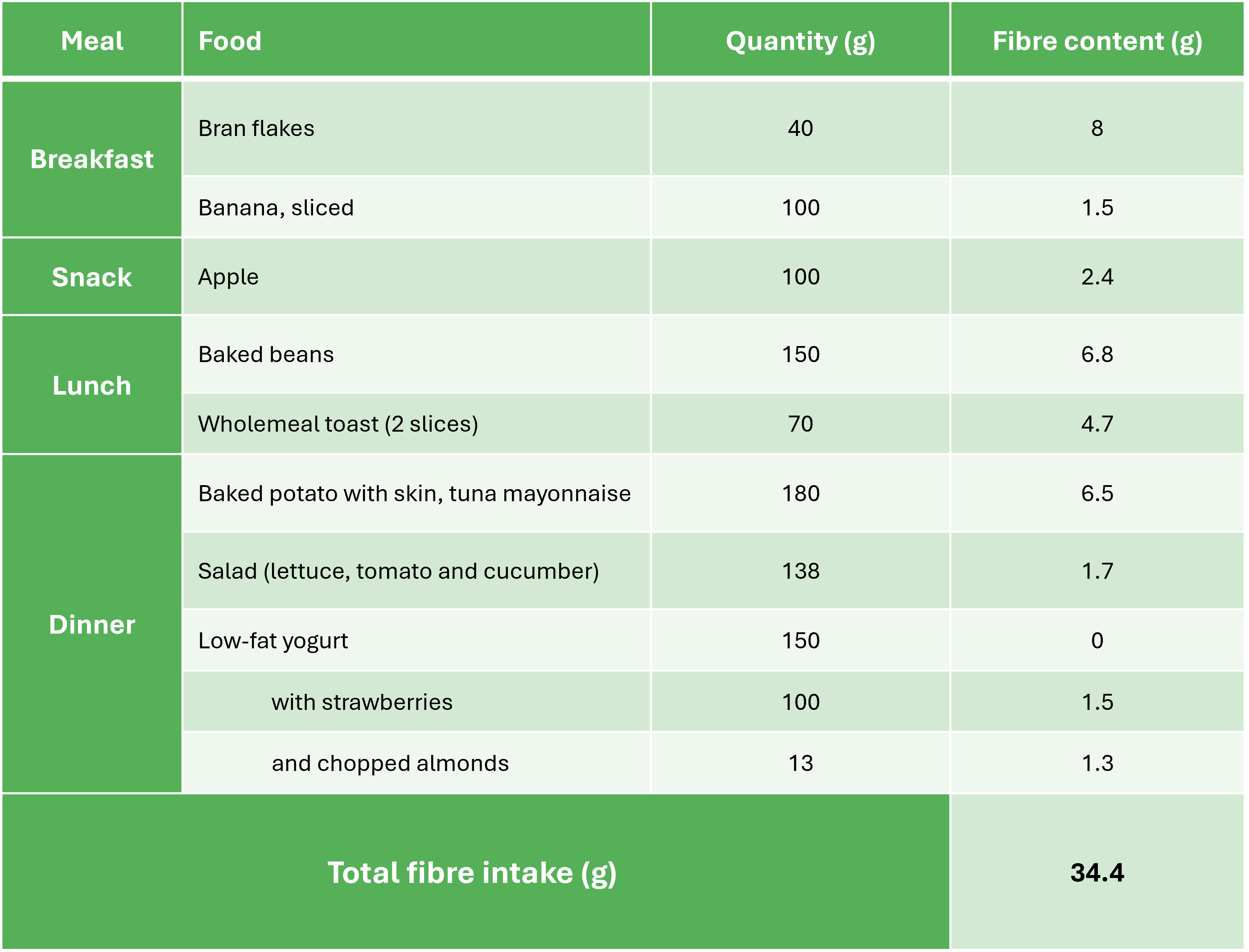
It also helps to eat a variety of foods that contain fibre, because different types of fibre can support our body and health in different ways. For more information on meals and snacks that meet fibre intakes, see our 7-day meal planner, which has a week’s menu that meets both fibre and sugar recommendations.


And for steady weight loss, our Nourish in Colour planner, provides meals and snacks that meet fibre recommendations on a reduced calorie intake


Need more inspiration on staying active? Take a look at our physical activity guidelines.

10 Top Tips To Increase Your Fibre Intake

Remember, if you want to increase your fibre intake, increase it gradually! This can help reduce bloating, gas and discomfort.

It’s also important to drink plenty of fluids (most adults should aim for 6 to 8 glasses per day) and to be active for at least 150 minutes per week - as these both contribute to keeping your gut healthy.

  1. Choose a high-fibre breakfast cereal - for example, wholegrain cereals like wholewheat biscuit cereal, no added sugar muesli, bran flakes or porridge. 
  2. Add fibre to your cereal - try adding fresh fruit, dried fruit, seeds and/or nuts to your cereal or yogurt. 
  3. Switch to wholemeal or seeded wholegrain breads - if you or your family usually only like white bread, start by trying the versions that combine white and wholemeal flours.
  4. Cook with wholegrains - like wholewheat pasta, bulgur wheat or brown rice.
  5. Leave the skin on potatoes - like baked potatoes, wedges or boiled new potatoes. 
  6. Snack on fibre-rich foods - try opting for snacks like fruit, vegetable sticks, rye crackers, oatcakes, houmous and unsalted nuts. 
  7. Include plenty of vegetables with meals - either as a side dish or added to sauces, stews or curries. This is a great way of getting children to eat more veg!
  8. Stock up your freezer - keeping a handy supply of frozen vegetables in your freezer can prevent waste and ensure you’re never without.
  9. Add pulses to your favourite meals - pulses like beans, lentils or chickpeas can be easily added to stews, curries and salads. 
  10. Don’t forget canned foods - canned beans or chickpeas are a quick and cost-effective way to add fibre to a meal.

Fibre FAQs

A diet that includes a variety of fibre-rich foods may help support the ‘good bacteria’ in the gut. Some types of fibre are broken down by gut bacteria and can help them grow and flourish. Research in this area is still developing, and the effects can vary depending on the type of fibre we consume and the person, which is why a variety of different types is important! 


Around 100 trillion micro-organisms live in our gut (gut microbiota) and most of these are bacteria. There are many species of gut bacteria, and these can be either beneficial or harmful to our health. The balance of the bacteria in our gut can be affected by several different factors, such as diet, lifestyle and medicines.. 


Research is increasingly showing the importance of the bacteria in our gut when it comes to our health. Studies have investigated the effects of our gut bacteria on different aspects of our health including gut health (such as irritable bowel syndrome), obesity, immune function and brain function.


Some fibres act as food for gut bacteria. These include fermentable fibres such as inulins from onions, leeks, wheat and oats and galacto-oligosaccharides, found in pulses like beans, lentils and chickpeas provide a food source for ‘good’ gut bacteria.

If you increase the amount of fibre in your diet too quickly, you may get bloating, wind or stomach discomfort while your digestive system gets used to the change. 


Try to increase fibre slowly over time rather than making big changes all at once, to allow the bacteria in your digestive system to adjust. Don’t forget to drink enough fluids too!

If you have too much fibre, especially if you increase it too quickly, you may get bloating, wind, stomach cramps, constipation or diarrhoea. Drinking enough fluids can help prevent dehydration. . 


It can also prevent the absorption of some key nutrients.


Eating too much fibre can make you feel full, preventing you from consuming a variety of other foods. It's important to have a balanced diet so try to stick to the recommended amounts.


If fibre is causing symptoms, try reducing it a little and then increasing it more gradually. If symptoms continue, speak to your GP or a dietitian.

If you have been diagnosed with IBS, you may find that certain high fibre foods worsen symptoms, but this varies from person to person and by fibre type. For example, bran, may make symptoms worse for some people, whereas oats are often better tolerated.


However, there is no one recommended diet or medication for those who suffer from IBS. If you have IBS and are not sure what is making your symptoms worse, speak to your GP, who may recommend creating a food diary to better understand your triggers whilst also ensuring you are getting the fibre you need to stay healthy. You may also be referred to a dietitian to help you manage your symptoms and diet. 

“Fibremaxxing” is a term used on social media to describe actively trying to increase fibre intake, often with the goal of reaching 30g or more per day.


The idea reflects a real issue. Most people in the UK do not eat enough fibre, so increasing intake can be beneficial. Diets higher in fibre are linked with improved digestion, better blood sugar control and a lower risk of some long-term diseases. However, the concept can be oversimplified.


Fibre is not a single substance. Different types of fibre have different effects in the body, including how they influence digestion, cholesterol levels and the gut microbiome. Focusing only on increasing the total amount of fibre may miss these differences.


It is also important to make changes gradually. Increasing fibre too quickly can lead to bloating, gas and discomfort, as some fibres are fermented by gut bacteria.


So should you try it? For most people, the goal should be to:

  • Increase fibre intake gradually
  • Focus on a variety of plant foods, such as wholegrains, pulses, fruit and vegetables
  • Aim to meet recommended intake of 30g per day


A balanced approach that includes different types of fibre as part of a healthy, balanced diet is more likely to support long-term health.

Last reviewed October 2023. Next review due October 2026.

Did you find this page useful?

We'd love to hear your feedback. If you would like a response, please contact us.

Please note that advice provided on our website about nutrition and health is general in nature. We do not provide any individualised advice on prevention, treatment and management for patients or their family members.

I found this page useful